Recommended Methods for Resolving a Leak in Your Garbage Disposal
Click HereJust how do you really feel when it comes to Garbage Disposal Leaking From Bottom?

Waste disposal unit are essential kitchen home appliances that assist in taking care of food waste successfully. Nevertheless, a leaking waste disposal unit can be an aggravating and messy trouble to take care of. The good news is, lots of leaks can be dealt with quickly with a couple of simple actions. In this short article, we will certainly talk about how to deal with a leaking garbage disposal efficiently.
Intro
Waste disposal unit are installed under kitchen area sinks and are designed to shred food waste right into smaller pieces, permitting it to pass through the plumbing system conveniently. While these devices are typically trusted, leakages can take place over time because of deterioration, loose connections, or damage to the unit.
Common Reasons For Leaks in Trash Disposals
Worn Seals and Gaskets
Seals and gaskets play a critical duty in protecting against water from leaking out of the garbage disposal. Over time, these components can wear away, bring about leaks around the disposal device.
Loose Links
The connections between the waste disposal unit and the pipes system can come to be loose in time, triggering water to leakage out during operation.
Fractures or Openings in the Disposal Unit
Physical damage to the garbage disposal, such as cracks or openings in the housing, can likewise cause leaks.
Recognizing the Resource of the Leak
Before trying to take care of a leaking waste disposal unit, it is important to identify the resource of the leakage. This can generally be done through aesthetic examination or by conducting simple examinations.
Visual Assessment
Examine the waste disposal unit system carefully for any type of signs of water leakage. Pay very close attention to areas around seals, gaskets, and connection factors.
Testing for Leakages
One method to evaluate for leaks is by running water with the disposal unit and checking for any type of visible signs of leakage.
Tools and Products Needed for Taking Care Of a Leaking Garbage Disposal
Prior to beginning the repair work procedure, gather the essential devices and products, including a screwdriver, flexible wrench, plumbing technician's putty, substitute seals or gaskets, and epoxy or patching product for repairing cracks or openings.
Step-by-Step Guide to Fixing a Leaking Waste Disposal Unit
Switch off the Power
Prior to attempting any repair services, guarantee that the power to the waste disposal unit system is turned off to prevent the risk of electrical shock.
Locate the Leak
Identify the specific area of the leakage and figure out the reason.
Tighten up Links
Make use of a wrench to tighten up any loose links between the disposal unit and the pipes system.
Replace Seals or Gaskets
If the leakage results from used seals or gaskets, remove the old parts and replace them with new ones.
Patching Cracks or Openings
For splits or holes in the disposal unit, use epoxy or a suitable patching product to secure the broken location.
Checking the Garbage Disposal After Repair Service
When the fixing is complete, examine the waste disposal unit by running water via it to make certain that the leakage has been solved.
Preventive Upkeep Tips to Avoid Future Leakages
To stop future leaks, it is necessary to carry out routine maintenance on your waste disposal unit. This includes keeping it tidy, avoiding placing non-food products or tough objects down the disposal, and periodically checking for leaks or other issues.
Final thought
Finally, dealing with a dripping garbage disposal is a reasonably uncomplicated process that can be completed with fundamental tools and materials. By complying with the steps described in this post and exercising preventive upkeep, you can keep your waste disposal unit in good working problem and prevent expensive repairs in the future.
What to Do About a Leaking Garbage Disposal
A leaking garbage disposal often goes unnoticed until you confront a sopping cabinet, a foul-smelling puddle, or an audible drip-drip-drip from the unit. The fix can be frustrating, too, because the leak can stem from a number of components in the system. Fortunately, with a little sleuthing, you can zero in on the leak and—depending on the exact location—stop the icky oozing and repair the component that caused it. Worst case scenario, if it turns out that the garbage disposal must be replaced, installing a new one is a reasonable do-it-yourself task for those with basic plumbing skills. Read on to keep the cash you’d otherwise hand over to a pro.
Prepare to find the leak
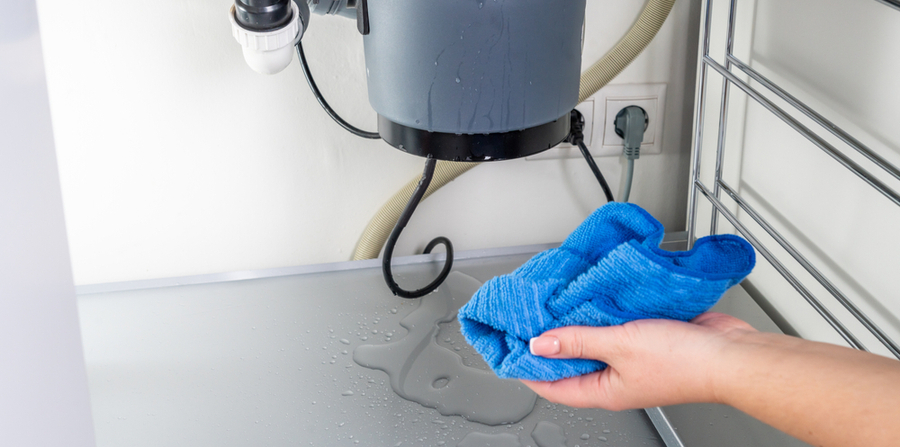
Prior to testing the garbage disposal for leaks, unplug it at the wall outlet and turn off the power from the breaker box to prevent electrical shock. Then insert a watertight sink stopper into your sink drain and wipe the unit dry with a clean cloth. In any handy container, mix a few drops of food coloring into a few cups of water, and pour the dyed water onto the sink stopper to help you locate the leak.
Investigate the source
the top, where the disposal meets the sink drain the side, where the dishwasher hose or main drain pipe connects to the disposal or the bottom of the unit Inspect each of these locations while gliding a light-colored rag over the unit; the dyed water will readily show on the rag and reveal the location of the leak. If a leak isn’t immediately apparent, remove the sink stopper and pour a few more cups of dyed water down the sink drain, then check for leaks again. Leaks near the top of the unit are more likely to show themselves while the sink is plugged, while side and bottom leaks are more noticeable while the sink is unplugged.
The metal sink flange that sits directly inside the sink drain is typically sealed around the top with plumber’s putty (a clay-like sealant) and then secured from under the sink with bolts. If the plumber’s putty deteriorates, or the bolts loosen, the flange can no longer form a watertight seal between the sink drain and the disposal—which could cause a leak at the top of the unit.
To reseal the leaky flange, you must first detach the garbage disposal. Start by loosening the screws securing the main drain pipe to the disposal, then loosen the screws in the metal clamp securing the dishwasher hose to the disposal and detach the drain pipe and dishwasher hose from the disposal. Loosen the screws in the mounting ring that connects the disposal to the metal mounting assembly beneath the sink, then pull down the disposal and carefully set it on a clean, dry surface. Loosen the bolts in the mounting assembly with a wrench, then pull down the mounting assembly and set it near the disposal.
I am very interested by Garbage Disposal Leaking From Bottom and I hope you enjoyed the blog posting. Are you aware of somebody who is excited about The Handy Guide To Fixing Your Garbage Disposal Leaking? Be sure share it. Thanks for your time. Kindly come visit our site back soon.
See Availability